Home/Podcasts

Why Your Phone Is Ruining Your Sleep

Why Your Phone Is Ruining Your Sleep

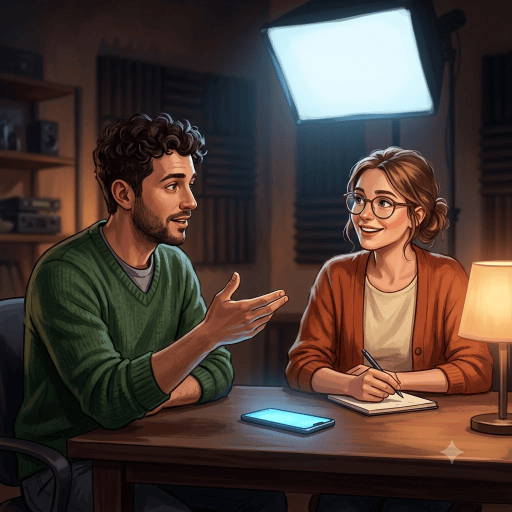
Jack and Emma explore the connection between screen time and poor sleep quality, discussing blue light, bedtime routines, and practical strategies for a better night's rest.

PodcastB1HealthFree to learnPrintable worksheet
15mAudioEnglish with translations in EnglishQuizzes
Your interface language is the language you are learningMeanings and translations appear in the interface language, so they would only repeat the words. Switch the interface to a different language to look up words, translate sentences and see the meanings of your saved words.
Jack Dawson

Hello everyone, and welcome back to the Heylangs Podcast. I'm Jack Dawson. Last night I told myself: five more minutes. Forty minutes later, I was watching a video about a man restoring an old railway carriage in his back garden. You're listening to the Heylangs Podcast! Today we're diving into a topic that affects almost all of us: sleep, and more specifically, how our phones are messing it up. I used to scroll through social media for at least an hour before bed, and I honestly thought it was helping me relax. It turns out I was completely wrong, and once I changed this habit, my sleep improved dramatically within just a couple of weeks.

Emma Wells

And I'm Emma Wells. I'm not even slightly surprised it was a video about trains, Jack. This topic hits close to home for me too, because I struggled with insomnia for years without really understanding why. I'd lie in bed for hours, checking messages and scrolling through videos, wondering why I couldn't fall asleep. It wasn't until a doctor explained the science behind screens and sleep that things finally started to click for me.

Jack Dawson

Let's start with the basics then. Can you explain what blue light actually is, and why it matters so much for our sleep patterns? I've heard the term thrown around a lot, but I don't think I fully understood the mechanism until fairly recently.

Emma Wells

Sure! Blue light is a type of light that phone and computer screens emit, and it's similar to the light our brains associate with daytime. When we look at screens close to bedtime, our brain gets confused and thinks it's still daytime. This suppresses melatonin, the hormone that signals to our body that it's time to sleep.

Jack Dawson

That makes so much sense now. So basically, by staring at our phones right before bed, we're tricking our brains into staying alert when they should be winding down. No wonder so many people struggle to fall asleep even when they feel physically exhausted.

Emma Wells

Exactly. And it's not just the blue light itself; it's also the content we're consuming. Scrolling through social media, reading stressful news, or getting into an argument in a group chat right before bed keeps our minds active and anxious. Our brains need time to settle down, not more stimulation.

Jack Dawson

I remember reading somewhere that checking work emails late at night is particularly harmful. Even if the email itself isn't stressful, just thinking about work tasks can trigger our brain to start planning and worrying. It's like inviting stress into your bedroom right when you're trying to relax.

Emma Wells

That's such a good point. Back when I was a reporter at the local paper, I was guilty of checking work emails right before turning off the light, and I would often lie awake thinking about deadlines or unfinished projects. Once I established a rule to stop checking emails after eight o'clock, my ability to relax before bed improved significantly.

Jack Dawson

Let's talk about what actually happens when we don't get enough quality sleep. I know it feels bad the next day, obviously, but what's actually going on inside our bodies when we're sleep-deprived night after night? I think many people underestimate the long-term consequences of chronic poor sleep.

Emma Wells

Chronic sleep deprivation affects nearly every system in our body. It weakens our immune system, making us more susceptible to getting sick. It also affects our mood, memory, and ability to concentrate, which can impact both our personal relationships and our performance at work.

Jack Dawson

I definitely noticed the mood connection when I was sleeping badly. I'd get irritated over small things that normally wouldn't bother me at all. My patience was incredibly short, and I remember snapping at friends and family members for no real reason, which wasn't like me at all.

Emma Wells

That's such a common experience. Poor sleep essentially puts our nervous system on edge, making everything feel more overwhelming than it actually is. I've noticed the same pattern in myself; when I'm well-rested, small annoyances barely register, but when I'm exhausted, everything feels like a crisis.

Jack Dawson

So, what changes did you actually make, Emma, to break this cycle? I know you mentioned the email rule, but what else helped you establish healthier sleep habits over time? I'm sure many of our listeners are curious about practical steps they can take.

Emma Wells

The biggest change was creating a proper wind-down routine at least an hour before bed. I put my phone in another room, which sounds extreme, but it removed the temptation completely. Instead, I started reading physical books, which don't emit blue light and actually help me feel sleepy.

Jack Dawson

Putting your phone in another room seems like such a simple solution, but I imagine it requires a lot of discipline at first. Did you find it difficult to break the habit of reaching for your phone whenever you couldn't fall asleep immediately?

Emma Wells

Honestly, the first week was quite challenging. I kept reaching for a phone that wasn't there, almost out of muscle memory. But after about ten days, my body adjusted, and I stopped feeling that urge altogether. Now, falling asleep without checking my phone feels completely natural.

Jack Dawson

That's really encouraging to hear. I've started using the phone's built-in night mode feature, which reduces blue light in the evening. It's not a perfect solution, but it does seem to help a little, especially combined with dimming the brightness manually after sunset.

Emma Wells

Night mode is a decent starting point, but I'd argue it's more of a compromise than a real solution. The content on your screen is still stimulating your brain, even if the light itself is warmer and less blue. The best approach is really just reducing screen time overall, especially in that final hour before bed.

Jack Dawson

What about people who use their phones as alarm clocks? That was actually my biggest excuse for keeping my phone by my bed for years. I always claimed I needed it there to wake up on time, even though I clearly used it for other things too.

Emma Wells

That's such a common excuse, and I used it myself for a long time! Buying a simple, cheap alarm clock solved this problem completely for me. Now there's genuinely no reason for my phone to be in the bedroom at all, and it removes that late-night temptation entirely.

Jack Dawson

That's a small investment that clearly pays off in the long run. Let's talk about the bedroom environment more broadly. Beyond screens, what other factors contribute to poor sleep quality that people might not think about immediately?

Emma Wells

Temperature plays a huge role, actually. A room that's too warm can make it much harder to fall and stay asleep. Many sleep experts suggest keeping your bedroom slightly cool, often somewhere around eighteen degrees Celsius, though everyone is a little different. Darkness matters too; even small amounts of light from streetlights or electronics can disrupt your sleep cycle.

Jack Dawson

I installed blackout curtains last year, and honestly, it made a noticeable difference. I used to wake up whenever the sun rose early in summer, but now my room stays dark until I actually want to get up, or until Coco decides it's breakfast time, whichever comes first. It's such a simple change that had a surprisingly big impact.

Emma Wells

Blackout curtains are definitely worth the investment. I'd also recommend paying attention to noise levels. Some people sleep better with complete silence, while others prefer white noise to block out unpredictable sounds from outside. It really depends on personal preference, so it's worth experimenting to find what works for you.

Jack Dawson

What about caffeine and its connection to sleep quality? I know we've talked about screens mostly today, but I imagine caffeine plays a significant role too, especially for people who drink coffee later in the afternoon.

Emma Wells

Absolutely, caffeine can stay in your system for several hours, depending on your metabolism. Drinking coffee after lunch might feel fine at the time, but it can still disrupt your ability to fall into deep sleep later that night, even if you don't notice it directly.

Jack Dawson

I've cut back on afternoon coffee significantly since learning that. Now I try to have my last cup before noon, and I genuinely believe it has helped me fall asleep faster. It's amazing how these small lifestyle adjustments add up to create such a meaningful difference over time.

Emma Wells

That's great to hear, Jack. Small, consistent changes really do add up over time in ways we don't always notice right away.

Jack Dawson

Let's talk about a related issue, Emma: doom-scrolling. I've noticed that late at night, I often end up scrolling through negative news stories, which definitely doesn't help me relax. Do you think there's a particular reason why we're drawn to this kind of content right before bed, even when we know it's not good for us?

Emma Wells

Doom-scrolling is fascinating from a psychological perspective. Our brains are wired to pay attention to threats and danger, which is why alarming headlines grab our attention so easily. At night, when we're tired and our willpower is lower, we're especially vulnerable to falling into this pattern without even realizing it.

Jack Dawson

That explains a lot, actually. I've caught myself reading article after article about topics that genuinely stress me out, and then wondering why I couldn't fall asleep afterward. It's almost like my brain forgets that this behavior directly contradicts my goal of relaxing before bed.

Emma Wells

It's a strange contradiction, isn't it? We know logically that stressful content will keep us awake, yet we keep consuming it anyway. I think part of the solution is being more intentional about what apps we open in the evening, rather than mindlessly opening whatever app comes to mind first.

Jack Dawson

How do you personally handle that temptation, Emma? Do you have any specific strategies for avoiding doom-scrolling once you've decided to put your phone away for the night, especially on nights when you're feeling particularly anxious or restless?

Emma Wells

I've found that having an alternative activity ready really helps. Instead of just telling myself not to scroll, I have a book or a journal nearby that I can turn to instead. Simply removing an option without replacing it with something else usually doesn't work well for most people, including me.

Jack Dawson

That's a really practical approach. I've started keeping a small notebook by my bed too, actually. Whenever a worry pops into my head, I write it down instead of pulling out my phone to research it or distract myself. It helps me feel like the thought has been acknowledged without needing immediate action.

Emma Wells

That's such a clever technique, Jack. Writing things down essentially tells your brain that the thought has been captured and doesn't need to be actively held onto anymore. Many sleep therapists actually recommend this exact method for people who struggle with racing thoughts at bedtime.

Jack Dawson

Let's shift gears slightly and talk about weekends versus weekdays. Do you think our sleep habits should differ between work days and days off, or is consistency more important regardless of the day of the week? I know I'm definitely guilty of staying up much later on weekends.

Emma Wells

Consistency is actually really important, even though it's tempting to stay up late and sleep in on weekends. This pattern is sometimes called social jet lag, because it essentially shifts your internal clock similarly to traveling across time zones. It can make Monday mornings feel especially difficult after an inconsistent weekend schedule.

Jack Dawson

That term makes so much sense now that I think about it. I definitely notice that Mondays feel harder after a weekend of staying up late and sleeping in until noon. It's like my body has to readjust all over again, almost as if I traveled somewhere far away and came back.

Emma Wells

Exactly, and this readjustment period can actually take several days to fully resolve. That's why some sleep experts recommend trying to keep your wake-up time relatively consistent, even on weekends, while allowing yourself some flexibility with bedtime instead. It's a small compromise that can make a big difference.

Jack Dawson

That's a helpful distinction. I think I'll try waking up around the same time on Saturdays and Sundays, even if I allow myself to go to bed a little later than usual. It seems like a reasonable middle ground between strict consistency and total freedom.

Emma Wells

Let's also touch on naps, since many people rely on them to make up for lost sleep. Do you nap regularly, Jack, and have you noticed any effects on your nighttime sleep as a result? I know naps can be a bit controversial among sleep experts.

Jack Dawson

I used to nap almost every afternoon, especially on weekends, but I noticed it made falling asleep at night much harder. Once I cut back on long naps, my nighttime sleep improved noticeably. Now I only nap occasionally, and I try to keep it under twenty minutes if I do.

Emma Wells

That twenty-minute guideline is something many sleep researchers suggest. Short naps can boost alertness without interfering too much with your nighttime sleep cycle, while longer naps can push you into deeper sleep stages that leave you feeling groggy and disrupt your natural sleep schedule later that night.

Jack Dawson

Let's wrap up with some practical advice for our listeners who want to improve their sleep starting tonight. First, try to avoid screens for at least thirty minutes before bed, ideally a full hour if possible. Second, keep your bedroom cool, dark, and quiet for the best sleep environment.

Emma Wells

I'd add: buy an actual alarm clock so your phone can stay out of the bedroom entirely. Also, try establishing a consistent wind-down routine, whether that's reading, stretching, or simply relaxing without any devices nearby. Consistency really seems to be the key to lasting improvement.

Jack Dawson

That's a really solid list, Emma. Small, practical steps like these are so much easier to stick with than trying to overhaul everything at once.

Emma Wells

This has been such a valuable conversation, Jack. Sleep affects so much of our daily lives, yet it's often the first thing we sacrifice when we're busy or stressed. I hope our listeners feel motivated to make small changes tonight rather than waiting for the perfect moment. And if you've tried all of this and still can't sleep for weeks at a time, please talk to a doctor, because ongoing insomnia can have causes that a bedtime routine alone won't fix.

Jack Dawson

Thanks so much for listening, everyone. Remember, a little practice every day makes a big difference. Put that phone away tonight, and give your body the rest it truly deserves. See you next time on Heylangs!

Tap any underlined word for its meaning.

What do you think?

  • How much time do you usually spend on your phone before going to bed?
  • What is one change you could make tonight to improve your sleep quality?
  • How should workplaces handle late-evening emails, in your opinion?
0:00 / 0:00

About this lesson

Jack and Emma explore the connection between screen time and poor sleep quality, discussing blue light, bedtime routines, and practical strategies for a better night's rest. It is written at B1 level, so Main ideas of real texts. Read it, listen where audio is available, tap words you do not know and finish with the quiz.

Frequently asked questions

What level is this lesson?
It is B1 (Intermediate) on the CEFR scale: Main ideas of real texts.
Is this lesson free?
Yes. You can read the whole lesson for free. Free accounts have daily limits on word look-ups, quizzes and AI tools; Premium removes them.
How do I understand words I do not know?
Tap any word for its meaning, save it to your word list, and review it later with spaced repetition.