Home/Podcasts

Are Video Games a Form of Art?

Are Video Games a Form of Art?

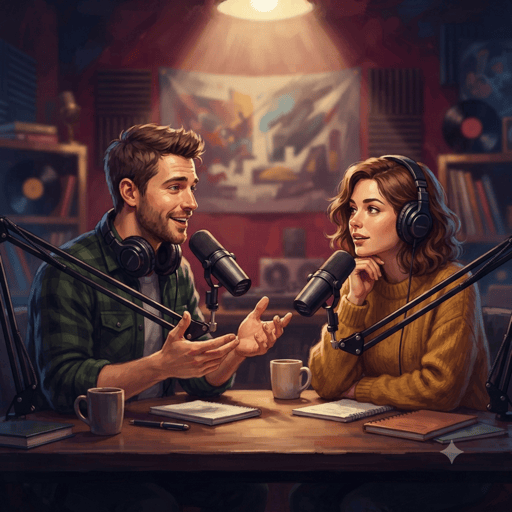
Jack and Emma discuss whether video games should be considered a serious art form, looking at storytelling, music, and visual design in modern games.

PodcastB1EntertainmentFree to learnPrintable worksheet
16mAudioEnglish with translations in EnglishQuizzes
Your interface language is the language you are learningMeanings and translations appear in the interface language, so they would only repeat the words. Switch the interface to a different language to look up words, translate sentences and see the meanings of your saved words.
Jack Dawson

Hello everyone, and welcome back to the Heylangs Podcast. I'm Jack Dawson. My niece Mia is nine, and last weekend she told me a video game made her cry. Not because she lost, because of the story. Today we're diving into a topic that always sparks debate: are video games really a form of art?

Emma Wells

And I'm Emma Wells. Out of the mouths of nine-year-olds. This is one of my favorite subjects, actually, because I used to think games were just entertainment for kids, but my opinion has completely changed.

Jack Dawson

What changed your mind, Emma? I'm curious what made you look at games differently.

Emma Wells

A few years ago, I played a game called 'Journey', where you travel through a desert as a robed figure, and there's almost no dialogue at all.

Jack Dawson

I've heard of that one! It's known for its stunning visuals and emotional soundtrack, right?

Emma Wells

Exactly. By the end, I was genuinely moved, almost to tears, and I realized this felt more like watching a beautiful film than playing a typical game.

Jack Dawson

That's a powerful example. I had a similar experience with a game called 'The Last of Us'. The storytelling felt as strong as any award-winning drama series.

Emma Wells

Right, and that game even got turned into a television show because the story was so well-written and emotionally rich.

Jack Dawson

So let's break this down a bit. What elements make something 'art' in the traditional sense? Usually we think of painting, music, and literature.

Emma Wells

Art typically expresses emotion, tells a story, or makes us think about the world differently. And honestly, the best games do all of that.

Jack Dawson

Think about the visual design alone. Games like 'Hades' or 'Ori and the Blind Forest' have artwork that could hang in a gallery.

Emma Wells

Absolutely. Some studios hire concept artists who trained in fine arts before working in the gaming industry.

Jack Dawson

And let's not forget the music! Video game soundtracks have become incredibly sophisticated. Some composers now have full orchestras perform their scores live.

Emma Wells

That's true. I've been to a concert where an orchestra played music from 'The Legend of Zelda' series, and it was just as moving as any classical concert.

Jack Dawson

So the argument for games as art seems pretty strong. But what about the critics? What do people who disagree usually say?

Emma Wells

Some critics argue that games are primarily designed to be fun and interactive, which makes them different from art meant purely for reflection or appreciation.

Jack Dawson

That's a fair point, but couldn't you say the same about theater or dance? Those are interactive and performative too, yet we still call them art.

Emma Wells

That's a great comparison, actually. Interactivity doesn't necessarily remove the artistic value; it might even add a new dimension to it.

Jack Dawson

Exactly, because in a game, you're not just watching a story unfold, you're actively shaping how it plays out through your choices.

Emma Wells

Right, take a game like 'Detroit: Become Human'. Your decisions completely change the story's outcome, which gives players a personal connection most films can't offer.

Jack Dawson

That personal connection is huge. I remember feeling genuinely guilty after making a certain choice in a game, almost like I had done something wrong myself.

Emma Wells

That emotional response is exactly what good art is supposed to trigger. It makes you reflect on your own values and decisions.

Jack Dawson

Let's talk about museums for a second. Have you noticed that some major museums now have exhibitions dedicated entirely to video games?

Emma Wells

Yes! The Smithsonian in Washington actually had an exhibition called 'The Art of Video Games' some years back. That felt like a turning point for how society views games.

Jack Dawson

That's a significant moment, honestly. When a respected institution recognizes something as art, it changes the public conversation entirely.

Emma Wells

It does. Although I think there's still a generational gap. Older generations sometimes struggle to see games the same way they see paintings or novels.

Jack Dawson

That makes sense, since many people didn't grow up with games as part of their culture, so it's harder for them to appreciate the medium fully.

Emma Wells

Exactly, whereas younger generations grew up experiencing complex storytelling through games first, so it feels completely natural to them.

Jack Dawson

Let's discuss the creative process behind making a game too. How long do you think it takes to develop a major title?

Emma Wells

Some big games reportedly take anywhere from three to seven years to develop, involving hundreds of artists, writers, musicians, and programmers working together.

Jack Dawson

That's basically the same scale as producing a big-budget film, which strengthens the argument that games deserve similar artistic respect.

Emma Wells

Definitely. And just like film directors, some game designers have become recognized as visionary artists, like Hideo Kojima or Shigeru Miyamoto.

Jack Dawson

Kojima's games are known for their unusual, thought-provoking themes. His work often blurs the line between entertainment and philosophical commentary.

Emma Wells

Exactly, his games make players question reality, technology, and human connection, which sounds a lot like what great literature or cinema does.

Jack Dawson

Let's talk about accessibility for a moment. Do you think games being interactive makes art more accessible to everyday people?

Emma Wells

I think so. Not everyone feels comfortable walking into an art gallery, but almost anyone can pick up a controller and start experiencing a story.

Jack Dawson

That's an interesting point. Games might actually be democratizing art, bringing complex storytelling to people who wouldn't otherwise engage with traditional art forms.

Emma Wells

Right, and mobile games have expanded that even further. Games like 'Monument Valley' are beautiful, artistic puzzles accessible to anyone with a smartphone.

Jack Dawson

I've played that one! The architecture and color palette felt inspired by the artist M.C. Escher. It was visually stunning.

Emma Wells

It really was. So even short, simple mobile games can carry serious artistic weight if the creators put thought into the design.

Jack Dawson

Let's address the counterargument one more time. Some people say games are just products, made to earn money through purchases and subscriptions.

Emma Wells

That's true for some games, especially ones designed around microtransactions. But that doesn't erase the artistic value of games made with genuine creative vision.

Jack Dawson

Right, just like some films are pure commercial products while others are genuine artistic achievements. The same logic applies to games.

Emma Wells

Exactly, it's unfair to judge an entire medium by its worst examples. We wouldn't dismiss all films because some are low-quality.

Jack Dawson

That's a solid point. So where do you personally stand now, Emma? Do you fully believe games are art?

Emma Wells

I do, wholeheartedly. Not every game reaches that level, but the best ones combine storytelling, music, and visuals in ways that rival any traditional art form.

Jack Dawson

I completely agree. I think the debate itself is becoming outdated. Society is slowly catching up to what dedicated gamers have known for years.

Emma Wells

Let's shift a bit and talk about indie games, the ones made by small teams instead of huge companies. I feel like they push the artistic boundaries even further sometimes.

Jack Dawson

That's a great point. Indie developers often don't have the pressure of pleasing shareholders, so they can take bigger creative risks with their storytelling and design.

Emma Wells

Exactly. A game like 'Undertale' was made mostly by one person, and it completely reinvented how players think about choices and consequences within a game.

Jack Dawson

I love that example. It shows that artistic vision doesn't require a massive budget, just a strong idea and a willingness to experiment with the format.

Emma Wells

Right, and 'Papers, Please' is another indie game that made players confront moral dilemmas as a border officer, which felt more like political commentary than entertainment.

Jack Dawson

That's fascinating, because it uses gameplay mechanics themselves to teach a lesson, rather than just telling the player what to think through dialogue.

Emma Wells

That's actually something unique to games as a medium. The gameplay itself can carry meaning, which isn't something books or films can fully replicate.

Jack Dawson

Let's talk about esports for a moment too. Do you think competitive gaming fits into this conversation about art, or is that a completely separate topic?

Emma Wells

That's an interesting question. I'd argue esports is more like a sport than an art form, since it focuses on skill, competition, and reflexes rather than emotional storytelling.

Jack Dawson

That makes sense to me. Although I'd say there's still artistry in how professional players move and strategize, similar to watching a skilled athlete or dancer perform.

Emma Wells

That's true, there's definitely elegance in watching a highly skilled player execute a perfect combo or strategy during a tournament.

Jack Dawson

Let's talk about nostalgia too. Do you think older games, even simple ones like early Mario titles, deserve to be seen as art now, decades later?

Emma Wells

I think so, actually. Those early games were groundbreaking for their time, and they influenced an entire generation of designers who came after them.

Jack Dawson

Right, and there's something almost historical about them now, similar to how we view early films from the silent era as important artistic milestones.

Emma Wells

That's a great comparison. Just because the technology was limited doesn't mean the creativity behind those games wasn't genuinely impressive for its era.

Jack Dawson

Let's also discuss virtual reality games. Do you think VR adds a new artistic dimension, or does it just make games more immersive without adding real depth?

Emma Wells

I've only tried VR a few times, but I remember feeling completely transported into another world, which is something no painting or film has ever done for me.

Jack Dawson

That's exactly what makes VR so interesting. It removes the boundary between viewer and artwork, placing you directly inside the experience itself.

Emma Wells

I think as the technology improves, VR could become one of the most powerful storytelling tools we've ever had, assuming developers use it thoughtfully.

Jack Dawson

Let's talk about education too. Do you think games can be used to teach people, not just entertain them, while still maintaining their artistic value?

Emma Wells

Definitely. There are historical games that let you explore ancient Egypt or Greece in incredible detail, teaching history in a way textbooks simply can't match.

Jack Dawson

That's a great point. When learning becomes an experience rather than just memorization, it tends to stick with people much longer.

Emma Wells

Exactly, and some language learning apps even use game-like elements to keep users motivated, which shows how powerful this format really is beyond pure entertainment.

Jack Dawson

That connects nicely to what we do here at Heylangs, actually, using engaging content to help people practice a new language naturally.

Emma Wells

It really does. Whether it's games, podcasts, or stories, engaging formats seem to help information stick far better than passive learning ever could.

Jack Dawson

Let's talk about criticism and reviews too. Do professional critics review games the same way they review films or novels these days?

Emma Wells

They actually do now. Major publications have dedicated game critics who analyze narrative structure, pacing, and thematic depth, just like film critics do.

Jack Dawson

That shift in serious criticism really reflects how far the industry has come from being seen as just children's entertainment.

Emma Wells

Absolutely. There are even academic courses now at universities dedicated entirely to studying video game design and its cultural impact.

Jack Dawson

That's remarkable, honestly. It shows that the conversation we're having today is part of a much larger cultural shift happening globally.

Emma Wells

I actually interviewed a game design lecturer once, back in my newspaper days, and I was surprised how much overlap there was with film studies and creative writing.

Jack Dawson

That doesn't surprise me at all. Designers have to think about pacing, character development, and tone, exactly the same concerns writers and directors deal with constantly.

Emma Wells

Let's talk about award shows too. There are now major award ceremonies just for video games, similar to the Oscars or the Grammys.

Jack Dawson

Yes, The Game Awards has become a huge event, with categories for narrative, music, and visual design specifically recognizing the artistic side of games.

Emma Wells

That kind of recognition matters a lot, I think, because it validates the years of creative work that goes into making these experiences.

Jack Dawson

It also gives young designers something to aspire to, similar to how young filmmakers dream of winning an Oscar someday for their work. Let's give our listeners a suggestion. If you've never really considered games as art, try playing something narrative-driven, like 'Journey' or 'Celeste', and approach it the way you would a film or a novel, paying attention to the themes and emotions it's trying to convey.

Emma Wells

Great recommendation. You might be surprised by how deeply a game can affect you, especially when you slow down and truly experience it rather than just rushing through it. Let's also mention how game art has crossed over into other industries. Fashion brands have collaborated with game franchises, and museums sell prints of famous game landscapes.

Jack Dawson

That's true, and film studios keep adapting popular games into movies and shows now, which suggests the industry sees real artistic and commercial value in these stories.

Emma Wells

Right, and some of those adaptations, like 'Arcane' based on 'League of Legends', ended up being praised even by people who had never played the original game.

Jack Dawson

That's a great sign, honestly. It means the storytelling and world-building were strong enough to stand completely on their own, outside of the game itself.

Emma Wells

Let's wrap up by imagining the future. Where do you think games will be, artistically, in another twenty years from now?

Jack Dawson

I think the line between games, films, and interactive art will blur even more, especially as technology like AI and VR continues to improve rapidly.

Emma Wells

I agree. Future generations might not even question whether games are art. They'll just accept it the same way we accept film and photography today.

Jack Dawson

This has been such a thought-provoking conversation, Emma. Thank you for sharing your perspective on this topic today.

Emma Wells

Thank you, Jack! It's always fun discussing something we both feel passionate about.

Jack Dawson

One last thought before we go. If any listeners are still skeptical, I'd just say give it a real chance before deciding.

Emma Wells

Exactly. Approach a good game the same way you'd approach a good film, with an open mind, and you might be pleasantly surprised.

Jack Dawson

That's a nice note to end on. Whether you agree or not, I hope this got you thinking about games in a slightly new way. Well, that wraps up today's episode on video games as an art form.

Emma Wells

Remember, a little practice every day makes a big difference. See you next time!

Tap any underlined word for its meaning.

What do you think?

  • To what extent do you consider video games a form of art? Explain your reasoning.
  • Describe a game, film, or book that changed how you feel about a topic.
  • How does interactivity change the power of storytelling, for better or for worse?
0:00 / 0:00

About this lesson

Jack and Emma discuss whether video games should be considered a serious art form, looking at storytelling, music, and visual design in modern games. It is written at B1 level, so Main ideas of real texts. Read it, listen where audio is available, tap words you do not know and finish with the quiz.

Frequently asked questions

What level is this lesson?
It is B1 (Intermediate) on the CEFR scale: Main ideas of real texts.
Is this lesson free?
Yes. You can read the whole lesson for free. Free accounts have daily limits on word look-ups, quizzes and AI tools; Premium removes them.
How do I understand words I do not know?
Tap any word for its meaning, save it to your word list, and review it later with spaced repetition.