Home/Podcasts

Can You Trust What You Read?

Can You Trust What You Read?

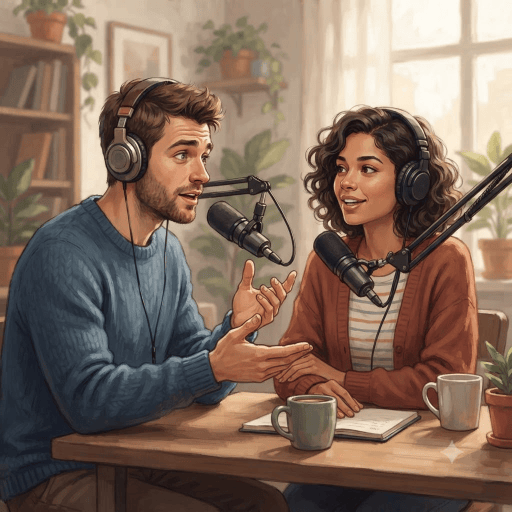
Jack and Emma explore how fake news spreads, why people believe it, and what is being done to rebuild public trust in information. They discuss real examples and personal experiences of being fooled online.

PodcastB2SocietyFree to learnPrintable worksheet
19mAudioEnglish with translations in EnglishQuizzes
Your interface language is the language you are learningMeanings and translations appear in the interface language, so they would only repeat the words. Switch the interface to a different language to look up words, translate sentences and see the meanings of your saved words.
Jack Dawson

Hello everyone, and welcome back to the Heylangs Podcast. I'm Jack Dawson. A few months ago, my friend Marco sent me a screenshot of a 'news' story about a London train line closing for good. I'd forwarded it to three people before I noticed the website's name was spelled wrong. The line is still running, by the way. Today we're tackling a topic that seems to be getting more complicated every year: whether or not we can trust what we read online.

Emma Wells

And I'm Emma Wells. Hi listeners. Don't feel too bad, Jack, because I have to confess something worse: I once shared a fake news article on my own social media before realizing it wasn't even remotely true.

Jack Dawson

Oh no, Emma, what happened exactly? I think a lot of our listeners have probably been in a similar situation at some point without even realizing it.

Emma Wells

It was a headline claiming a famous celebrity had donated their entire fortune to charity. It felt believable, it fit what I already thought of them, so I shared it instantly.

Jack Dawson

That's such a common trap, isn't it? If something confirms what we already believe, we're far less likely to question whether it's actually true or not.

Emma Wells

Exactly. Psychologists call this 'confirmation bias.' We're naturally drawn to information that supports our existing views, while we tend to dismiss anything that challenges them, even when it's accurate.

Jack Dawson

That makes complete sense from a human psychology perspective, but it obviously creates huge problems when misinformation spreads faster than the truth ever could online.

Emma Wells

There's actually research on that exact point. A well-known MIT study found that false news on social media travels farther and faster than true stories, reaching large audiences roughly six times faster by some measures.

Jack Dawson

Six times faster is a staggering statistic. Why do you think falsehoods travel so much quicker than accurate, carefully verified information ever manages to?

Emma Wells

Researchers suggest it's because false stories are often designed to be more surprising or emotionally provocative, whereas real news tends to be, frankly, a bit more boring by comparison.

Jack Dawson

That's a troubling incentive structure, given that outrage and shock value naturally generate more clicks, shares, and ultimately, more advertising revenue for whoever publishes it.

Emma Wells

Exactly, and that's precisely why so-called 'clickbait' websites exist in the first place. If sensational headlines drive traffic, there's very little financial incentive to prioritize accuracy over engagement.

Jack Dawson

Let's talk about where fake news typically comes from. Is it mostly random individuals, or are there more organized operations behind a lot of this misinformation?

Emma Wells

Both, honestly. Some misinformation starts with ordinary people misunderstanding something innocently, but there are also coordinated 'troll farms' that deliberately produce false content for political or financial gain.

Jack Dawson

That's genuinely unsettling. If some of this content is professionally produced and deliberately designed to deceive, how is an average reader supposed to tell the difference?

Emma Wells

It's difficult, which is exactly why media literacy has become such an important skill. Simple habits, like checking the source and searching for other coverage, can help enormously.

Jack Dawson

Speaking of sources, do you think most people even bother checking who actually wrote or published an article before sharing it with their friends?

Emma Wells

Sadly, no. A Stanford study found that many students, and even many adults, struggled to distinguish between a legitimate news site and a sponsored advertisement disguised as one.

Jack Dawson

That's genuinely concerning, especially given how much of our daily information now comes through smartphone screens rather than traditional newspapers people once trusted more carefully.

Emma Wells

Exactly, and the visual design of websites can be deceiving too. Fake news sites often deliberately copy the fonts, logos, and layouts of reputable, well-established news organizations.

Jack Dawson

That level of deliberate imitation feels almost like digital counterfeiting. Are there any effective tools or techniques you'd recommend to our listeners for spotting these fakes?

Emma Wells

Reverse image searches are surprisingly useful. If a dramatic photo seems too perfect, searching it often reveals it's actually old, unrelated, or taken completely out of context.

Jack Dawson

That's a practical tip. Let's talk about deepfakes too, since that seems to be the next frontier in this whole misinformation problem we've been discussing.

Emma Wells

Deepfakes are honestly terrifying in some ways. Using artificial intelligence, someone can now make it look like a real person said something they never actually said at all.

Jack Dawson

Have you come across any examples where a deepfake actually caused real-world confusion or consequences for the people involved or affected by it?

Emma Wells

There was a well-publicized deepfake video of a world leader making inflammatory statements, which briefly caused genuine panic before experts confirmed it had been artificially generated.

Jack Dawson

That's frightening, given how convincing this technology has become in just a few short years. What happens if we simply can't trust our own eyes anymore?

Emma Wells

That's precisely the concern experts are raising. Some researchers argue that as deepfakes improve, society might eventually develop a general distrust toward all video evidence, even genuine footage.

Jack Dawson

That would fundamentally change how journalism, courts, and even everyday arguments between people actually work if video could no longer be considered reliable proof of anything.

Emma Wells

Exactly. It's a genuinely complex challenge. On a more hopeful note, though, technology companies are developing detection tools designed to identify these manipulated videos automatically.

Jack Dawson

That's somewhat reassuring, though I imagine it becomes an ongoing arms race between people creating deepfakes and those developing methods to detect and expose them.

Emma Wells

That's exactly the phrase researchers use: an 'arms race.' As detection improves, so does the sophistication of the fakes, which keeps everyone constantly playing catch-up.

Jack Dawson

Let's discuss solutions beyond just technology now. What role do you think schools should play in preparing young people to navigate this complicated information landscape?

Emma Wells

Finland actually offers a great example here. Media literacy is taught from primary school onward, and studies show Finnish citizens are now among the best in Europe at spotting misinformation.

Jack Dawson

That's an encouraging model for other countries to potentially follow. What specifically do Finnish students learn as part of this media literacy curriculum in schools?

Emma Wells

They learn to analyze sources critically, recognize emotional manipulation tactics, and understand how algorithms decide what content appears in their personal social media feeds each day.

Jack Dawson

That last point about algorithms seems especially important. Could you explain a bit more about how algorithms actually influence what misinformation we're exposed to?

Emma Wells

Certainly. Social media platforms are designed to keep us engaged, so their algorithms often prioritize content that generates strong reactions, regardless of whether that content happens to be accurate.

Jack Dawson

So the platform itself has a built-in incentive that sometimes conflicts directly with the goal of promoting only accurate, trustworthy information to its users.

Emma Wells

Precisely. This creates what researchers call 'filter bubbles,' where users increasingly see content that reinforces their existing beliefs while rarely encountering opposing or corrective viewpoints.

Jack Dawson

Before we finish, let's return to something personal. Did that embarrassing experience change how you now behave online when you encounter surprising or dramatic news?

Emma Wells

Completely. I now have a personal rule: if a story seems too shocking or perfectly confirms my beliefs, I wait at least ten minutes before sharing it anywhere.

Jack Dawson

That's a smart, simple habit anyone could adopt. Sometimes just pausing for a moment is enough to prevent spreading something that isn't actually true.

Emma Wells

Exactly. And honestly, admitting when you're wrong publicly, like I eventually did with that celebrity story, matters just as much as being careful in the first place.

Jack Dawson

That's a great note to end on, Emma. Trust online isn't going to fix itself automatically; it takes effort from platforms, governments, schools, and individuals alike.

Emma Wells

Completely agree. Every time we pause before sharing, or check a source carefully, we're making a small contribution toward rebuilding a healthier, more trustworthy information environment. Let's talk about fact-checking organizations too, since they've become a significant part of the fight against misinformation. Do you think they're actually making much of a difference?

Jack Dawson

I think they help, though their reach is limited. A fact-check might correct a false claim, but it rarely spreads as widely as the original misinformation did in the first place.

Emma Wells

That's called the 'correction gap,' if I remember correctly. A false claim might reach a million people, while its correction only reaches a fraction of that same audience.

Jack Dawson

That's a discouraging statistic, given how much effort goes into fact-checking in the first place. Why do you think corrections struggle so much to reach the same audience?

Emma Wells

Partly because corrections are less emotionally engaging than the original false claim, and partly because algorithms simply don't prioritize them the way they prioritize sensational content.

Jack Dawson

That connects back to what we discussed earlier about platforms being designed for engagement rather than accuracy. It seems like the whole system is working against truth by default.

Emma Wells

Exactly. Some platforms have started experimenting with adding warning labels directly onto flagged content, which does seem to reduce sharing somewhat, according to early research.

Jack Dawson

That sounds like a reasonable middle ground between removing content entirely, which raises free speech concerns, and doing absolutely nothing about clearly false information.

Emma Wells

Right, though critics argue warning labels can sometimes backfire, making people more curious about the flagged content rather than less interested in engaging with it.

Jack Dawson

That's an interesting psychological twist. It seems like every proposed solution comes with its own set of unintended consequences that researchers have to carefully consider.

Emma Wells

Exactly, which is why this problem doesn't have one simple fix. It requires ongoing experimentation, ongoing research, and honestly, a fair amount of patience from everyone involved.

Jack Dawson

Let's talk about journalism itself for a moment. Do you think traditional news organizations have handled this crisis of trust well, or have they made things worse somehow?

Emma Wells

It's mixed, honestly. Some outlets have doubled down on transparency, showing their sources and methods clearly, while others have leaned into sensationalism just to compete for attention.

Jack Dawson

That competitive pressure must be difficult to resist, especially when sensational headlines from less scrupulous competitors are clearly winning more clicks and generating more revenue.

Emma Wells

Exactly, and that pressure has led to what some critics call a 'race to the bottom,' where even respected outlets occasionally publish exaggerated or misleading headlines.

Jack Dawson

That's disappointing to hear, especially from organizations that are supposed to hold themselves to higher journalistic standards than random anonymous accounts on social media.

Emma Wells

It is disappointing, though there are encouraging counterexamples too. Some newspapers have started publishing detailed corrections prominently, rather than burying them in small print somewhere obscure.

Jack Dawson

That kind of visible accountability probably helps rebuild trust gradually, even if it takes a genuinely long time to repair damage that's already been done to public confidence.

Emma Wells

Definitely. Trust, once broken, is notoriously difficult to rebuild. Surveys consistently show public trust in media has declined significantly over the past two decades across many countries.

Jack Dawson

Do you think this declining trust is entirely the media's own fault, or are there other broader factors contributing to this widespread skepticism we're seeing today?

Emma Wells

I think it's a combination of factors. Political polarization plays a huge role, since people increasingly distrust any source that doesn't confirm their existing political views.

Jack Dawson

That connects right back to confirmation bias again, doesn't it? It seems like almost every thread in this conversation eventually leads back to that same underlying psychological tendency.

Emma Wells

It really does. Understanding confirmation bias might honestly be the single most useful tool for navigating today's incredibly complicated information environment responsibly and thoughtfully.

Jack Dawson

Let's end with something practical. If you had to give our listeners just one piece of advice for evaluating information online, what would it be?

Emma Wells

I'd say: get curious instead of certain. Ask where the information came from, who benefits from you believing it, and whether other reliable sources confirm the same story.

Jack Dawson

That's excellent advice. Curiosity really does seem like a healthier default response than either blind trust or complete cynicism toward everything we encounter online.

Emma Wells

Exactly. Neither extreme serves us well. The goal isn't to trust nothing at all, but rather to trust thoughtfully, based on evidence rather than emotion or convenience.

Jack Dawson

Before we truly wrap up, I want to bring in another angle: what about older generations who didn't grow up navigating this digital landscape from childhood?

Emma Wells

That's such an important point that often gets overlooked. Research suggests that people over sixty-five share misinformation at noticeably higher rates than younger, more digitally native users.

Jack Dawson

That's surprising in some ways, though I suppose it makes sense given they didn't grow up learning to critically evaluate content the way younger people increasingly do.

Emma Wells

Exactly. My Nan once shared a completely fabricated health claim about a common vegetable curing serious diseases, purely because a trusted old friend had sent it to her directly.

Jack Dawson

That personal connection probably made it feel more credible than an anonymous website ever could, even though the actual source of the claim was never verified.

Emma Wells

Precisely. Trust in the messenger often overrides scrutiny of the actual message itself, which makes misinformation from friends and family especially difficult to counteract effectively.

Jack Dawson

Did you manage to convince your Nan that the claim wasn't accurate, or was it a difficult conversation to navigate without causing unnecessary friction between you two?

Emma Wells

It took patience, honestly. Rather than bluntly telling her she was wrong, I sat at her kitchen table in Cardiff and showed her how to search for the claim herself and find reliable medical sources debunking it.

Jack Dawson

That approach seems wiser than direct confrontation. Teaching someone to verify things independently probably sticks with them longer than simply correcting them on one specific occasion.

Emma Wells

Exactly, and it gave her a genuinely useful skill she could apply to future claims, rather than just fixing that one particular piece of misinformation temporarily.

Jack Dawson

That's a great strategy for families dealing with this issue. Let's also touch on something we haven't mentioned yet: satire and parody sites, which can confuse people too.

Emma Wells

Oh, that's such a tricky area. Satirical websites intentionally publish exaggerated or absurd stories for humor, but people sometimes take them completely seriously and share them as genuine news.

Jack Dawson

Has that ever happened with a story that you personally saw circulating as if it were real, when it was actually meant purely as satire or comedy?

Emma Wells

Constantly, actually. A well-known satirical publication once wrote a clearly absurd story that ended up being cited by international news outlets as an actual factual event.

Jack Dawson

That's almost comical in itself, though it does highlight how quickly context and nuance can get lost once something starts circulating widely across the internet.

Emma Wells

Exactly. It reinforces that same core lesson we keep returning to throughout this conversation: always check the source and context before accepting or sharing anything at face value.

Jack Dawson

That's a fitting theme to tie everything together with. Thank you so much for sharing your experiences and insights on this topic today, Emma; it's been genuinely eye-opening.

Emma Wells

Thank you, Jack. It's a topic that affects literally everyone who uses the internet, so I hope our listeners walk away feeling a bit more prepared and thoughtful.

Jack Dawson

Absolutely. And if you take just one thing from today's episode, let it be this: slow down before you share, and trust thoughtfully rather than automatically.

Emma Wells

That's a wonderfully simple rule to carry forward. Ten seconds of pausing could genuinely prevent a great deal of unnecessary confusion and division spreading across our communities.

Jack Dawson

Couldn't agree more. On that note, let's bring today's episode to a close, though I suspect this is a conversation we'll need to keep revisiting for years to come.

Emma Wells

Definitely. As technology keeps evolving, so will the challenges, but hopefully so will our collective ability to think a little more carefully about it.

Jack Dawson

Well said, Emma. Thank you all so much for listening today. A little practice every day makes a big difference. See you next time!

Tap any underlined word for its meaning.

What do you think?

  • Describe a time when you or someone you know believed something online that later turned out to be false. What happened?
  • To what extent should social media companies be held responsible for the spread of misinformation on their platforms?
  • What could schools do to better prepare students to critically evaluate information they see online?
0:00 / 0:00

About this lesson

Jack and Emma explore how fake news spreads, why people believe it, and what is being done to rebuild public trust in information. They discuss real examples and personal experiences of being fooled online. It is written at B2 level, so Fluent conversation. Read it, listen where audio is available, tap words you do not know and finish with the quiz.

Frequently asked questions

What level is this lesson?
It is B2 (Upper-intermediate) on the CEFR scale: Fluent conversation.
Is this lesson free?
Yes. You can read the whole lesson for free. Free accounts have daily limits on word look-ups, quizzes and AI tools; Premium removes them.
How do I understand words I do not know?
Tap any word for its meaning, save it to your word list, and review it later with spaced repetition.