Home/Podcasts

Books Versus Their Movie Adaptations

Books Versus Their Movie Adaptations

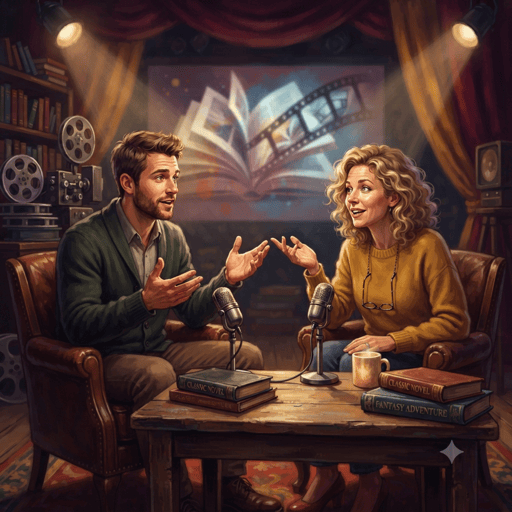
Jack and Emma debate whether movie and TV adaptations can ever live up to the books that inspired them, discussing specific examples and what gets lost or gained in translation.

PodcastB2EntertainmentFree to learnPrintable worksheet
20mAudioEnglish with translations in EnglishQuizzes
Your interface language is the language you are learningMeanings and translations appear in the interface language, so they would only repeat the words. Switch the interface to a different language to look up words, translate sentences and see the meanings of your saved words.
Jack Dawson

Hello everyone, and welcome back to the Heylangs Podcast. I'm Jack Dawson. I once walked out of a cinema twenty minutes before the end because they'd cut my favorite character entirely. I'm not proud of it. Today we're tackling a debate that never seems to get resolved: are movie adaptations ever as good as the books they're based on?

Emma Wells

And I'm Emma Wells. Twenty minutes early, Jack? That's a protest, not a walkout. Oh, this is a topic close to my heart. I'm one of those people who almost always says 'the book was better', much to Sam's annoyance.

Jack Dawson

I actually think that's the default opinion for most avid readers, but I'm curious why you feel so strongly about it. What's your reasoning?

Emma Wells

For me, it comes down to interiority. Books let you access a character's inner thoughts directly, while films have to find external, visual ways to convey the same information.

Jack Dawson

That's a fair point. Voiceover narration exists, of course, but it's often considered a lazy shortcut rather than genuine cinematic storytelling.

Emma Wells

Exactly, and when a film relies too heavily on narration, it can feel like the director didn't trust the visual medium enough to convey emotion without explaining it.

Jack Dawson

Let's use a specific example. What's a book-to-film adaptation you feel handled this problem particularly well, despite the inherent challenge?

Emma Wells

I'd say 'The Lord of the Rings' trilogy did a remarkable job. Peter Jackson used visual composition and music instead of narration to convey the internal struggles of characters.

Jack Dawson

That's an excellent choice. The scene where Frodo confronts the ring's temptation communicates his inner turmoil purely through facial expression and lighting, without a single word of exposition.

Emma Wells

Exactly, and that's where film can actually surpass the book in certain moments, using purely visual language to achieve something prose can only describe indirectly.

Jack Dawson

That raises an interesting question, though. Do you think there are cases where the movie is genuinely better than the source material?

Emma Wells

I'd say 'The Godfather' is a strong example. The novel is entertaining, certainly, but the film elevated the material into something far more artistically ambitious and enduring.

Jack Dawson

I completely agree with that one. Coppola's direction, combined with the performances, created something that transcended its pulpy source material entirely.

Emma Wells

It's worth noting that even the author, Mario Puzo, co-wrote the screenplay, and he's often quoted as being quite relaxed about the film improving on aspects of his original novel.

Jack Dawson

That's a rare and refreshing level of self-awareness from an author. Most writers seem far more protective and less willing to acknowledge such improvements.

Emma Wells

Let's talk about the opposite scenario now, then. What's an adaptation you feel completely butchered its source material, in your honest opinion?

Jack Dawson

Honestly, I have strong feelings about certain fantasy adaptations that dramatically altered character arcs and plot structures, seemingly just to fit a shorter runtime.

Emma Wells

That's such a common complaint, isn't it? Condensing hundreds of pages into two hours inevitably requires ruthless cutting, which often sacrifices nuance for pacing.

Jack Dawson

Right, and that's precisely why I think television adaptations have become increasingly popular. A limited series gives creators far more room to breathe than a single film ever could.

Emma Wells

That's a great point. Shows like 'Game of Thrones', at least in its earlier seasons, benefited enormously from having eight to ten hours per season to develop complex storylines.

Jack Dawson

Exactly, and interestingly, once the show surpassed the published books, its quality noticeably declined for many viewers, which says something about the strength of the source material.

Emma Wells

That's a fascinating case study, actually. It almost proves your earlier point: without the depth of the novels to draw from, the show struggled to maintain the same level of nuance.

Jack Dawson

Let's discuss casting now. Do you think seeing an actor's specific interpretation of a character can ruin your own imagined version from reading the book?

Emma Wells

Absolutely, and this happens to me constantly. Once I've seen a film adaptation, it becomes almost impossible to picture the character any other way when rereading the book.

Jack Dawson

I've experienced that too. Sometimes casting works brilliantly, though, and actually enhances how I imagine the character in future rereadings of the original text.

Emma Wells

Can you think of a casting choice that genuinely improved your mental image of a character, rather than replacing or diminishing it?

Jack Dawson

I'd argue certain actors bring such nuanced performances that they add layers the author only hinted at, making the character feel more three-dimensional than the prose alone conveyed.

Emma Wells

That's a generous way of framing it. I suppose great acting can sometimes fill in gaps that even skilled writing leaves somewhat ambiguous or underdeveloped.

Jack Dawson

Let's talk about pacing and structure too. Books can meander through subplots for chapters, whereas films demand a much tighter, more economical narrative structure.

Emma Wells

That's true, and I think this is where adaptations often lose the most. Beloved subplots frequently get cut entirely, frustrating readers who cherished those specific storylines.

Jack Dawson

Right, and studios often justify these cuts by arguing that general audiences, unfamiliar with the book, would find certain tangents confusing or unnecessary for the main plot.

Emma Wells

That's a valid commercial concern, admittedly, though it does create tension between satisfying devoted fans and appealing to a broader, less invested audience.

Jack Dawson

Let's talk about tone as well. Have you ever seen an adaptation that completely misjudged the emotional tone of its source material?

Emma Wells

Definitely. I've seen adaptations turn genuinely dark, morally complex novels into something far lighter and more sanitized, presumably to appeal to a wider commercial audience.

Jack Dawson

That's such a shame when it happens, because tone is often integral to what made the original story resonate so deeply with readers in the first place.

Emma Wells

Exactly, and conversely, I've also seen adaptations darken material that was originally more whimsical, misunderstanding what actually made readers fall in love with the story.

Jack Dawson

Let's discuss the visual imagination aspect too. Do you think reading a book before watching its adaptation fundamentally changes your viewing experience?

Emma Wells

It absolutely does, for me at least. I find myself constantly comparing every scene to how I originally imagined it, which can distract from appreciating the film on its own terms.

Jack Dawson

That's interesting, because I sometimes prefer watching the adaptation first, then reading the book afterward, to experience the story twice without that constant comparison.

Emma Wells

That's a clever strategy, actually. It lets you appreciate each medium independently, rather than constantly measuring one against the other from the very beginning.

Jack Dawson

Let's talk about unadaptable books now. Are there novels you believe simply cannot be translated successfully into film, regardless of how skilled the filmmaker might be?

Emma Wells

I'd argue novels that rely heavily on unreliable narration or stream-of-consciousness writing are particularly difficult, since those techniques depend entirely on the written word's unique capabilities.

Jack Dawson

That's a great point. Films have attempted stream-of-consciousness through voiceover or fragmented editing, but it rarely captures the same immersive, disorienting effect as the original prose.

Emma Wells

Right, and some books rely so heavily on the reader's imagination filling in gaps that any concrete visual representation inevitably disappoints, simply by making abstract concepts literal.

Jack Dawson

Let's talk about remakes and multiple adaptations too. Some books have been adapted several times over the decades. Do you think certain stories benefit from repeated reinterpretation?

Emma Wells

I think so, actually. Each adaptation reflects the cultural context of its own era, offering fresh perspectives on themes that might resonate differently with contemporary audiences.

Jack Dawson

That's a compelling argument. A story adapted in the nineteen-fifties will inevitably emphasize different themes than the same story adapted today, reflecting shifting social values.

Emma Wells

Exactly, and comparing multiple adaptations of the same source material can actually deepen your appreciation of both the original text and the adaptation process itself.

Jack Dawson

Let's talk about the financial incentives driving adaptations too. Studios often chase built-in audiences from bestselling books, rather than pursuing original screenplays.

Emma Wells

That's an important point. Adaptations carry lower financial risk since there's already a proven, dedicated readership eager to see their favorite story brought to the screen.

Jack Dawson

Right, though this commercial logic sometimes results in adaptations feeling more like obligatory cash grabs than genuine artistic endeavors crafted with real creative passion.

Emma Wells

That's a cynical but honest assessment, unfortunately. Not every adaptation is made with the same reverence and care that dedicated fans might hope for.

Jack Dawson

Let's talk about author involvement too. Do you think adaptations tend to be more faithful when the original author actively participates in the screenwriting process?

Emma Wells

Generally, yes, though not always. Sometimes authors are too close to their own material to make the necessary structural changes required for a different medium.

Jack Dawson

That's a fascinating paradox, isn't it? The person who knows the story best might actually struggle most with adapting it for an entirely different format.

Emma Wells

Exactly, screenwriting requires a distinct skill set from novel writing, and not every talented author naturally possesses both abilities in equal measure.

Jack Dawson

Let's discuss fan expectations too. How much responsibility do you think filmmakers have toward satisfying devoted readers versus creating an accessible film for newcomers?

Emma Wells

That's genuinely difficult to balance. I think filmmakers should honor the spirit and core themes of a book, without feeling obligated to replicate every single plot detail.

Jack Dawson

I agree with that philosophy. Fidelity to the emotional truth of a story often matters more than strict adherence to every minor narrative detail from the source material.

Emma Wells

Right, and honestly, some of the most beloved adaptations take significant creative liberties while still capturing what made the original story so meaningful to readers.

Jack Dawson

Let's talk about our own personal favorites now. What's an adaptation you'd recommend to someone who hasn't read the original book?

Emma Wells

I'd recommend 'The Shawshank Redemption', which is based on a Stephen King novella. Both are excellent, but the film stands entirely on its own merits.

Jack Dawson

That's a perfect example. I'd add 'Blade Runner', loosely based on Philip K. Dick's novel. The film diverges significantly, yet both works are considered masterpieces independently.

Emma Wells

That's such an interesting case, because the differences between the book and film are substantial, yet both manage to explore similar philosophical questions through entirely different approaches.

Jack Dawson

Let's talk about length constraints one more time. Some publishers now split a single novel into two films, presumably to capture more box office revenue from devoted fans.

Emma Wells

That's a controversial trend, honestly. Sometimes it genuinely benefits the story, allowing for richer detail, but other times it feels like a transparent effort to maximize profit rather than serve the narrative.

Jack Dawson

That's exactly my concern. When a single, cohesive story gets stretched across multiple films purely for financial reasons, pacing often suffers noticeably, with unnecessary padding added to justify the runtime.

Emma Wells

Right, and audiences tend to notice this manipulation eventually, which can breed resentment even among readers who initially loved the source material and eagerly anticipated the adaptation.

Jack Dawson

Let's discuss animation as an adaptation medium too. Do you think animated adaptations handle certain source material better than live-action versions ever could?

Emma Wells

That's an interesting angle. Animation offers unlimited visual possibilities, unrestricted by budget constraints on practical effects, which makes it ideal for fantastical or surreal source material.

Jack Dawson

Exactly, and I think animated adaptations of certain fantasy novels have captured whimsical, imaginative elements that live-action versions struggled to render convincingly with special effects alone.

Emma Wells

Studio Ghibli's adaptations come to mind immediately. Their version of 'Howl's Moving Castle' took considerable creative liberties, yet captured the spirit of the original novel beautifully, particularly its themes around vanity, aging, and self-acceptance.

Jack Dawson

That's a wonderful example. Even though Miyazaki changed significant plot elements, the emotional core and thematic concerns remained remarkably faithful to Diana Wynne Jones's original vision.

Emma Wells

Let's talk about musical adaptations too. Some novels have been transformed into stage musicals before eventually becoming films. Does that additional layer of translation interest you?

Jack Dawson

It does, actually. 'Les Misérables' went from novel to musical to film, and each transformation emphasized different aspects of Victor Hugo's sprawling, socially conscious original story.

Emma Wells

That's a perfect example of a story evolving across multiple mediums, with each version bringing something new while still honoring the emotional resonance of the source material.

Jack Dawson

Let's talk about audiobooks briefly too, since they represent another interesting middle ground between reading and watching a fully visualized adaptation.

Emma Wells

That's true. Audiobooks preserve the original text entirely while adding vocal performance, which arguably creates a different, though still fundamentally literary, experience compared to film.

Jack Dawson

Right, a skilled narrator can bring surprising nuance to a text, almost like a one-person radio play, without altering a single word of the author's original writing.

Emma Wells

Let's talk about international adaptations too. Have you noticed differences in how various countries approach adapting beloved literary works compared to major Hollywood productions?

Jack Dawson

Yes, actually. I've noticed some international adaptations feel more willing to embrace ambiguity and slower pacing, rather than catering to conventional three-act commercial structures.

Emma Wells

That's a fascinating cultural distinction. Hollywood often prioritizes clear resolution and emotional catharsis, whereas certain international films seem comfortable leaving audiences with more unresolved, contemplative endings, trusting viewers to sit with ambiguity rather than tying everything up neatly.

Jack Dawson

Exactly, and I think that reflects broader differences in storytelling traditions, shaped by distinct cultural expectations around narrative closure and audience satisfaction.

Emma Wells

Let's discuss marketing too. Do you think promotional materials for adaptations sometimes create expectations that the finished film simply cannot deliver on?

Jack Dawson

Absolutely. Trailers often emphasize spectacle and action, even for adaptations of quieter, more introspective novels, which can mislead audiences about the actual tone of the finished film.

Emma Wells

That's a marketing problem more than a creative one, though it certainly affects how audiences receive and evaluate an adaptation upon its actual release.

Jack Dawson

Let's talk about sequel novels too. What happens when an adaptation becomes so successful that studios pursue further films beyond what the author originally wrote?

Emma Wells

That's genuinely risky territory, in my opinion. Without source material to draw from, screenwriters must invent entirely new stories, which can dilute the original author's carefully constructed vision.

Jack Dawson

Right, and fans often feel understandably protective when a franchise continues without direct authorial involvement, worrying the expanded story might contradict the established internal logic. It's a delicate balance between honoring a legacy and allowing a story room to grow.

Emma Wells

Let's touch on one more thing before wrapping up: streaming platforms now produce adaptations at an unprecedented rate. Do you think this volume affects overall quality?

Jack Dawson

I think it inevitably does. When dozens of adaptations are greenlit simultaneously, there's simply less time for the careful, thoughtful development that a truly great adaptation requires.

Emma Wells

That's a real concern. It sometimes feels like quantity is being prioritized over quality, with studios racing to option every bestseller before a competitor gets there first.

Jack Dawson

Right, and that rush can lead to rushed scripts, compressed production schedules, and ultimately adaptations that feel more like content than genuine artistic statements.

Emma Wells

Let's wrap up with some final thoughts, then. Do you think this debate between books and their adaptations will ever truly be resolved?

Jack Dawson

Honestly, I don't think it should be resolved. The tension between different mediums is precisely what makes this conversation so endlessly fascinating for readers and filmgoers alike.

Emma Wells

That's a wonderful way to frame it. Rather than declaring one version definitively superior, we should appreciate each medium for what it uniquely offers.

Jack Dawson

Exactly, books and films are fundamentally different art forms, each with distinct strengths, so comparing them too rigidly might miss the point entirely.

Emma Wells

Well said, Jack. This has been such an engaging conversation. I might actually revisit a few of these adaptations myself after our discussion today.

Jack Dawson

Same here, Emma! Maybe we should do a follow-up episode comparing a specific book and film in much greater detail sometime soon.

Emma Wells

That sounds like a fantastic idea. Well, that's all for today's episode about books versus their movie adaptations.

Jack Dawson

Remember, a little practice every day makes a big difference. See you next time!

Tap any underlined word for its meaning.

What do you think?

  • Which do you generally prefer: reading the book first or watching the adaptation first? Why?
  • Describe a movie or show adaptation that you felt was better than the original book, and explain why.
  • What do you think makes a story particularly difficult to adapt from page to screen?
0:00 / 0:00

About this lesson

Jack and Emma debate whether movie and TV adaptations can ever live up to the books that inspired them, discussing specific examples and what gets lost or gained in translation. It is written at B2 level, so Fluent conversation. Read it, listen where audio is available, tap words you do not know and finish with the quiz.

Frequently asked questions

What level is this lesson?
It is B2 (Upper-intermediate) on the CEFR scale: Fluent conversation.
Is this lesson free?
Yes. You can read the whole lesson for free. Free accounts have daily limits on word look-ups, quizzes and AI tools; Premium removes them.
How do I understand words I do not know?
Tap any word for its meaning, save it to your word list, and review it later with spaced repetition.
Books Versus Their Movie Adaptations (English B2) | Heylangs